If you're planning a trip to Paris, there's a good chance Le Marais is already on your list. And for good reason! Located mainly in the 3rd and 4th arrondissements, this neighborhood has a way of making you slow down, wander through little streets, and peek behind a few unexpected doors.
Le Marais: a neighborhood with a surprisingly literal name
Before becoming one of Paris's most sought-after neighborhoods, Le Marais was... a marsh. Yes, really! Located in a wetland area near the Seine, the land was gradually drained and developed over the centuries.
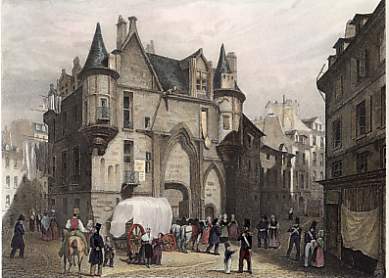
During the Middle Ages, religious communities and residents began settling in the area. Then, from the late 16th century and especially throughout the 17th century, Le Marais became a fashionable neighborhood for Parisian nobility. Wealthy families built magnificent private mansions, complete with courtyards, gardens, and beautifully decorated facades.
The French Revolution changed everything. Aristocratic families gradually left their homes, which were later occupied by artisans, merchants, and workers. Le Marais took on a new identity while preserving much of its historic architecture.
In the 20th century, many buildings faced deterioration and demolition projects. In 1964, Le Marais became France's first protected historic district, following an initiative led by André Malraux. This was a major step toward preserving its remarkable architectural heritage.
That's what makes the neighborhood so interesting today: in just a few streets, you can go from a medieval building to a 17th-century mansion, then stumble upon a contemporary art gallery or an independent boutique.
The cultural highlights
The best way to explore Le Marais is on foot. Of course, some places deserve a visit of their own, but much of the neighborhood's charm lies in everything you discover along the way.
Place des Vosges: A royal setting in the heart of Paris
You can't visit Le Marais without stopping by Place des Vosges. Inaugurated in 1612 under the name Place Royale, it's considered one of the oldest monumental squares in Paris.
Its red-brick facades, elegant arcades, and central garden create a beautifully balanced architectural setting. It's the perfect place to take a break, sit on a bench, or simply admire the surrounding buildings.
A little tip: don't just walk across the square. Take the time to explore the arcades and look closely at the facades. There's more to them than meets the eye.
The private mansions that tell the story of Aristocratic Paris
One of the defining features of Le Marais is its hôtels particuliers, the grand private mansions once built for wealthy Parisian families and aristocrats.
Behind many imposing doorways, you'll still find cobbled courtyards, gardens, and beautifully carved facades. Some of these historic buildings are now home to museums, libraries, and cultural institutions.
Notable examples include the Carnavalet Museum, dedicated to the history of Paris, and the Picasso Museum, housed in the magnificent Hôtel Salé.
And keep your eyes open: some of the neighborhood's best discoveries are hidden behind doors that look like ordinary apartment entrances.
Beaubourg and Centre Pompidou: the contemporary side of Le Marais
Le Marais isn't just about historic buildings. Just a short walk from its grand private mansions is Beaubourg, home to one of Paris's most recognizable buildings: Centre Pompidou.
Opened in 1977, this cultural center was designed by architects Renzo Piano and Richard Rogers, who completely challenged conventional ideas about architecture. Its colorful pipes, outdoor escalators, and exposed structure give it an almost industrial look. The building caused quite a stir when it first opened. Today, it's one of the city's great architectural landmarks.
Centre Pompidou is currently closed to the public for a major renovation, with reopening planned for 2030. But its striking exterior remains a must-see when exploring the neighborhood.
It's also a perfect example of what makes Le Marais so interesting: different eras coexist, from historic buildings to contemporary creations.
A neighborhood of many identities
Le Marais is also a deeply multicultural neighborhood, shaped by the different communities that have settled here over time.
It has a long Jewish heritage, a very visible LGBTQIA+ presence that has developed over several decades, and influences from many other cultures. These identities come together in the neighborhood's streets, shops, meeting places, galleries, and nightlife.
This diversity helps make Le Marais such a lively, open, and ever-changing part of Paris. You can go from a designer boutique to a neighborhood cafe, from a contemporary gallery to a historic institution, without ever feeling like you've stayed in the same place.
Perhaps that's the best way to understand Le Marais: a neighborhood that can't be defined by just one era, one atmosphere, or one community.
Discover a different side of Le Marais with Localist
You could spend hours wandering around Le Marais and still feel like there's more to discover. But to really understand what makes this neighborhood unique, you sometimes need to know where to look... and the stories behind the facades.
That's exactly what we had in mind when creating the Localist experience.
We've put together a self-guided walk through Le Marais, combining cultural discoveries, unexpected stories, and delicious food stops. The idea? Explore at your own pace, with your phone as your personal local companion.
No group to follow, no fixed schedule, and no need to spend hours planning your route. We've selected the places, stories, and local spots worth discovering. All you have to do is enjoy the walk!
Ready to explore Le Marais as if a local friend were showing you around?
👉 Discover the Localist Le Marais tour and experience Paris differently.